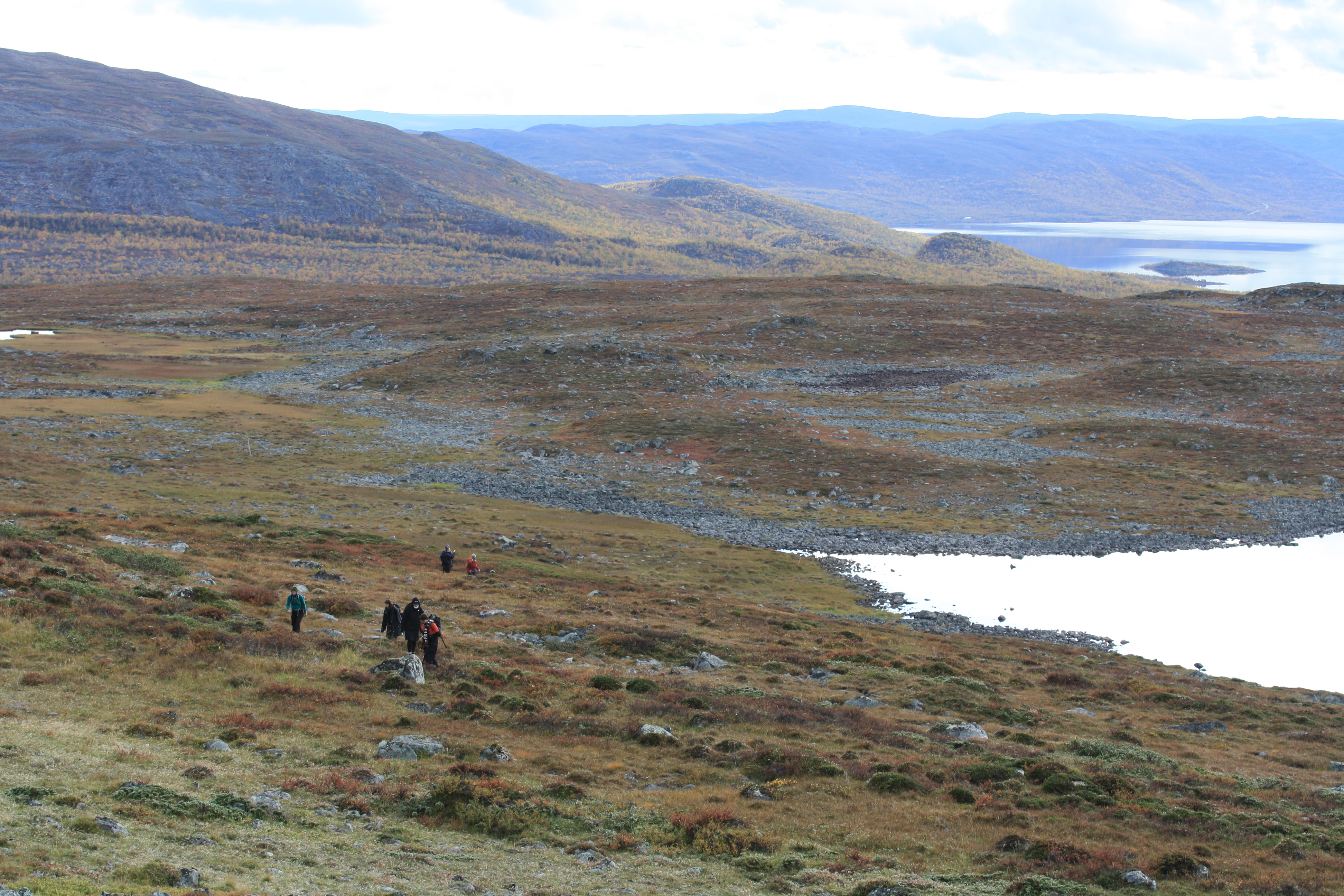



Ars Bioarctica is an art & science initiative with a focus on subarctic environment, taking place at the Kilpisjärvi Biological Station of the Faculty of Biological and Environmental Sciences of University of Helsinki. The program was first initiated in 2008, when Bioart Society was founded at the station. Currently, Bioart Society facilitates an ongoing Ars Bioarctica residency program and organises our Field_Notes biannual field lab at Kilpisjärvi.
Ars Bioarctica residency program
Ars Bioarctica fosters art-science research residencies, with a focus on responding to the subarctic environment and emergent ecological discourses. The locale’s unique ecology, social and economic cultures, as well as the scientific context and infrastructure of the Kilpisjärvi Biological Station act as a catalyst for site-sensitive research.
The station is home to numerous long-term monitoring initiatives, with the oldest—focused on vole populations—dating back to 1946. In addition to long-term monitoring, a wide range of research on land and water ecosystems is conducted, increasingly addressing the impacts of climate change.
As a setting of and for diverse research, the Ars Bioarctica has supported practitioners to explore a wide range of topics and methods, amongst others these include: ice and salt as living archives (1); geologic imaginations (2); multisensory engagements with regionally endangered lichens (3); liminality in tundra ecosystems and writing as embodied practice (4); rewilding the botanical gaze (5); atmospheric biosphere and ephemerality (6).
We welcome applications from artists, scientists and interdisciplinary researchers from varying backgrounds, locales and stages of practice.
Ars Bioarctica residencies are self funded and are best suited for independent research. Bioart Society manages the residency with the station, provides info sessions, a local mentor and remote studio visits with Bioart Society’s artistic director.
Due to the remote location and our desire to encourage longer term engagements in site responsive work, residencies are one month, but two week periods are also available.
The annual open call is generally held in January for residencies begining the following year.
Field_Notes biannual field lab
Field_Notes is an art and science field laboratory organised by Bioart Society at the Kilpisjärvi Biological Station of the University of Helsinki in Sápmi since 2011. The previous Field_Notes editions include Cultivating Grounds (2011), Deep Time (2013), HYBRID MATTERs (2015), EOS (2018), The Heavens (2019) and Traces (2021), and The North Escaping (2023).
As part of the Feral Labs Network, Field_Notes deconstructs the concept of the traditional scientific laboratory in favour of research and knowledges that are situated and responsive to locales and contexts. Here the land and human/more-than-human ecosystems are not something to simply research in or about but research with.
Location/ Context
The residency takes place in the facilities of the Kilpisjärvi Biological Station, which is located in the village of Gilbbesjávri (Northern Sámi) / Kilpisjärvi (Finnish), in Sápmi—the cultural region of the Sámi people, stretching across the state borders of Norway, Sweden, Finland and Russia.
Bioart Society recognises that our residency programme takes place on the indigenous territory of the Sámi people and acknowledges that we are guests on this land. We ask our residents to do the same.
Situated on the Finnish side of Sámpi, where the border of Finland, Sweden and Norway meet, the village of Gilbbesjávri has a little over 170 inhabitants and limited amenities but a well stocked store and a number of restaurants.
Weather and Environment
The region has a subarctic climate bordering closely on an alpine tundra climate with only one month above the 10° C (50° F) threshold. The climate and weather conditions in Gilbbesjávri vary greatly, so it is important to consider what kind of (field) work is possible in which season.
Part of the Käsivarsi Wilderness Area—the second-largest wilderness reserve in Finland—the terrain rises high above sea level and the landscape is dominated by high fells, including Saana (1,029 m), Termisvaara (1,024 m) and Halti (1,328 m). The general growing season only lasts for 100 days. Winter persists nearly all year long in the area. Lake Kilpisjärvi does not clear of ice until around midsummer. In spite of all this, the area has abundant vegetation. Kilpisjärvi/Gilbbesjávri has a distinctly oceanic climate affected by its northern location and altitude: the area is located over 400 metres above sea level and less than 50 kilometres from the Arctic Ocean. The region has one of the lowest mean annual temperatures on the European continent at only 2.3 °C. On average, the temperature does not rise above +10.9 °C in July. The ground is usually covered in snow from September or October to early June. Patches of snow may be found on the slopes of Malla all year round.
You can read more about Gilbbesjávri / Kilpisjärvi on the Kilpisjärvi Biological Station's website.